 Skip to content
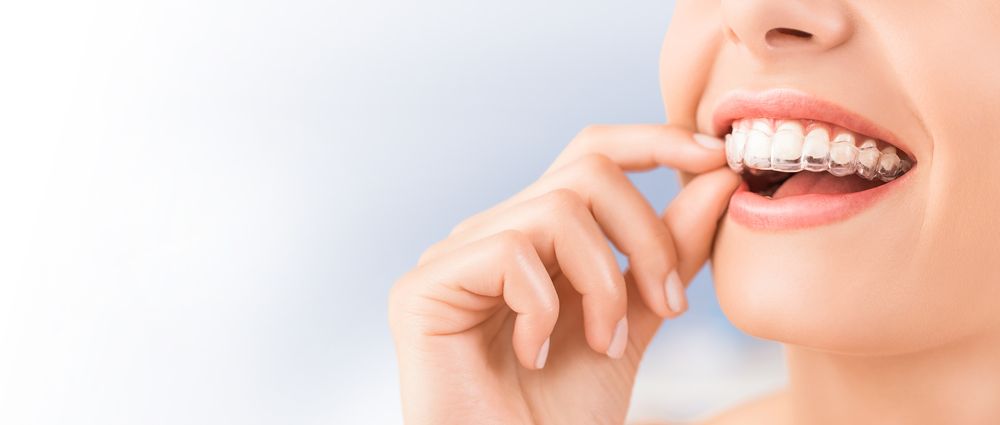
You’ve been thinking about Invisalign. Maybe you’ve already looked it up, maybe a friend mentioned it, or maybe you’re just tired of looking in the mirror and wishing your teeth looked different. But at some point, the question almost everyone asks is the same:
Can Invisalign actually fix what I have?
It’s a fair question, and it deserves a better answer than “it depends.” At PGA Dentistry in Palm Beach Gardens, Dr. Jay L. Ajmo has been treating patients with Invisalign for years, approaching each case not just as an orthodontic challenge but as an aesthetic one. With over 35 years of experience in cosmetic and restorative dentistry and in-office advanced iTero digital scanning technology, Dr. Ajmo can show you what your results will look like before you ever commit to treatment.
Here’s what he wants you to know about the most common problems patients come in asking about, overbites, crowding, gaps, crossbites, and more, and how to know whether Invisalign is the right answer for you.
Invisalign Fixes More Than Most People Think, But Not Everything
Modern Invisalign technology has come a long way from the early days of clear aligners. Today, Invisalign uses a proprietary material called SmartTrack and can incorporate small, tooth-colored “SmartForce attachments” bonded to specific teeth to give aligners additional grip for more complex tooth movements, including rotation, extrusion, and bite correction that once required traditional braces.
That said, there are still cases where clear aligners reach their limits. The difference between a good candidate and a poor one usually comes down to the severity and type of the alignment issue.
Can Invisalign Fix an Overbite?
Short answer: Yes, for mild to moderate overbites.
An overbite occurs when the upper front teeth overlap the lower front teeth too much. A small amount of overlap is normal (about 2–3 mm). Problems arise when that overlap becomes excessive, which can cause accelerated tooth wear, jaw strain, gum irritation, and in some cases, TMJ discomfort.
Invisalign addresses overbites by using precisely programmed aligner movements combined with SmartForce attachments and, in some cases, elastic bands connected to the aligners. These work together to gradually draw the lower jaw forward and bring the upper and lower arches into better harmony.
What determines candidacy:
- Mild overbite (3–5 mm): Excellent Invisalign candidate in most cases
- Moderate overbite (5–8 mm): Usually treatable with Invisalign; may require attachments and elastics
- Severe skeletal overbite: May require orthognathic (jaw) surgery in conjunction with orthodontic treatment; Invisalign alone is unlikely to achieve full correction
At your consultation at PGA Dentistry, Dr. Ajmo will take precise digital impressions with the iTero scanner and assess your specific bite relationship before recommending a treatment path.
Can Invisalign Fix Crowded Teeth?
Short answer: Yes, mild-to-moderate crowding responds very well.
Dental crowding happens when there isn’t enough space in the arch for all the teeth to sit properly. The result is overlapping, twisting, or rotating teeth that are harder to clean and more prone to cavities and gum disease in the long run. Crowding isn’t just a cosmetic concern.
Invisalign aligners work by gently expanding the arch or carefully repositioning individual teeth to create the space needed for proper alignment. For mild to moderate crowding, the SmartTrack material is highly effective. For teeth that are severely rotated (more than 20 degrees) or positioned very high in the gumline, plastic trays offer less mechanical leverage, and traditional braces or a combination approach may yield better results.
What determines candidacy:
- Mild crowding (1–3 mm of space deficiency): Excellent candidate
- Moderate crowding (3–5 mm): Good candidate; treatment may be longer
- Severe crowding (5+ mm or significant rotation): May need evaluation for braces or a combined approach
For Palm Beach Gardens adults who spend their professional lives in meetings, on the golf course, or in client-facing roles, Invisalign’s nearly invisible profile makes treating crowding without the look of metal brackets especially appealing.
Can Invisalign Close Gaps Between Teeth?
Short answer: Yes, gaps are one of Invisalign’s strongest use cases.
Gaps, also called diastemas, occur for a variety of reasons: smaller teeth relative to jaw size, gum tissue that pushes between the front teeth (a frenum attachment), natural spacing, or relapse from previous orthodontic treatment. Gaps between the front teeth are often what patients are most self-conscious about.
Invisalign aligners are designed to move teeth toward each other gradually, closing spaces in a controlled, predictable sequence. Small to moderate gaps respond particularly well. The iTero simulation at PGA Dentistry allows Dr. Ajmo to show you a 3D animation of exactly how your gap will close over the course of treatment, so you’re not guessing.
What determines candidacy:
- Small gaps (1–3 mm): Excellent candidate; often among the fastest cases
- Moderate gaps (3–5 mm): Good candidate; treatment straightforward with clear aligners
- Large single gaps or gaps caused by missing teeth: May need additional planning; if a tooth is missing, the gap may be better addressed with a dental implant or bridge rather than moving adjacent teeth into the space
One important note: if your gap is caused by a frenum (the band of tissue between your upper front teeth), the gap can close with Invisalign, but a simple frenectomy procedure may be recommended to prevent the space from reopening after treatment.
Can Invisalign Fix a Crossbite?
Short answer: Yes, Invisalign handles many crossbite cases effectively.
A crossbite occurs when one or more upper teeth bite inside the lower teeth rather than outside them. It can involve a single tooth or a group of teeth, and it can happen at the front or the sides of the mouth. Left untreated, a crossbite can cause uneven enamel wear, gum recession, and jaw asymmetry over time.
Invisalign can correct crossbites by moving the affected teeth into proper alignment. SmartForce attachments are typically used to achieve the degree of tooth movement needed. For posterior crossbites (back of the mouth), the correction is often very predictable with clear aligners. Severe skeletal crossbites, where the jaw itself is mispositioned rather than just the teeth, may require additional intervention.
Can Invisalign Fix an Open Bite?
Short answer: Yes, and this is an area where Invisalign has improved significantly.
An open bite means the upper and lower teeth don’t touch when the mouth is closed. In a typical case, the front teeth remain apart even when the molars are together, sometimes called an anterior open bite. This can affect speech, chewing, and overall bite function.
Open bites were once considered difficult for clear aligners to treat, but advances in Invisalign’s technology, including vertical elastics and improved movement programming, have made open bite correction much more achievable. Dr. Ajmo will assess the cause (dental vs. skeletal) and the degree of opening to determine the best approach.
Can Invisalign Fix an Underbite?
Short answer: Sometimes, but underbites are the most complex bite issue.
An underbite occurs when the lower jaw protrudes so that the lower teeth sit in front of the upper teeth. If the underbite is mild and dental in origin (teeth are positioned incorrectly, rather than the jaw itself being misaligned), Invisalign may be able to correct it. A significant skeletal underbite, where the lower jaw is structurally too far forward, typically requires orthodontic treatment in combination with jaw surgery.
Dr. Ajmo evaluates underbites carefully at consultation. Honesty matters here: not every underbite is an Invisalign case, and recommending the right treatment, even if it isn’t Invisalign, is always the goal.
Why Seeing a Cosmetic Dentist for Invisalign Makes a Difference in Palm Beach Gardens
Most Invisalign providers think about alignment. Dr. Ajmo thinks about alignment and aesthetics simultaneously.
As a cosmetic dentist with three decades of experience in smile design, veneers, and full facial aesthetics, Dr. Ajmo approaches your Invisalign treatment plan with the same eye he brings to every makeover case: Where do your teeth need to be for your smile to look its most natural and beautiful? How does your bite alignment relate to your lip support, your facial symmetry, and your overall facial balance?
This matters because teeth can be technically “straight” and still not look right. Dr. Ajmo’s iTero scanner not only creates a precise 3D model of your teeth, but it also lets you see a simulation of your expected results, in real time, before your first aligner is ever made. You’ll know what you’re signing up for.
And if Invisalign alone isn’t the full answer, if whitening, a bonding touch-up, or veneers on a few teeth would round out your result, Dr. Ajmo can address that within the same comprehensive treatment plan. That’s the difference between a standalone orthodontic provider and a cosmetic dental practice.
Frequently Asked Questions
Will my gap come back after Invisalign?
Gaps can reopen after treatment if retainers aren’t worn as directed. This is true of all orthodontic treatment; teeth naturally tend to drift back toward their original positions without retention. Dr. Ajmo provides Vivera retainers at the conclusion of Invisalign treatment to protect your investment long-term.
I have an overbite AND crowding — can Invisalign fix both at the same time?
Yes. Invisalign treatment plans are comprehensive, addressing multiple issues simultaneously within a single series of aligners. Many patients seeking Invisalign in Palm Beach Gardens have a combination of concerns, bite issues, and crowding, or gaps and an overbite, and Invisalign is designed to address them together.
What if Invisalign can’t fix my problem?
Dr. Ajmo will tell you directly if another option is better suited to your case. PGA Dentistry offers comprehensive cosmetic and restorative services, and we’ll always recommend the treatment most likely to give you the result you’re looking for — not the one that’s simplest to provide.
See if Invisalign Can Fix Your Problem with Your Complimentary Consultation at PGA Dentistry
If your overbite, crowded teeth, gaps, crossbite, or other alignment concern has been holding you back, you don’t have to wonder any longer. Dr. Jay Ajmo and the team at PGA Dentistry offer an Invisalign consultation where you’ll leave with answers, a simulation of your results, and a clear path forward.
Located at 7100 Fairway Dr, Suite 59 in Palm Beach Gardens, we serve patients throughout Palm Beach Gardens, Jupiter, North Palm Beach, and the surrounding communities.
Call us at (561) 627-8666 or schedule online today.
